
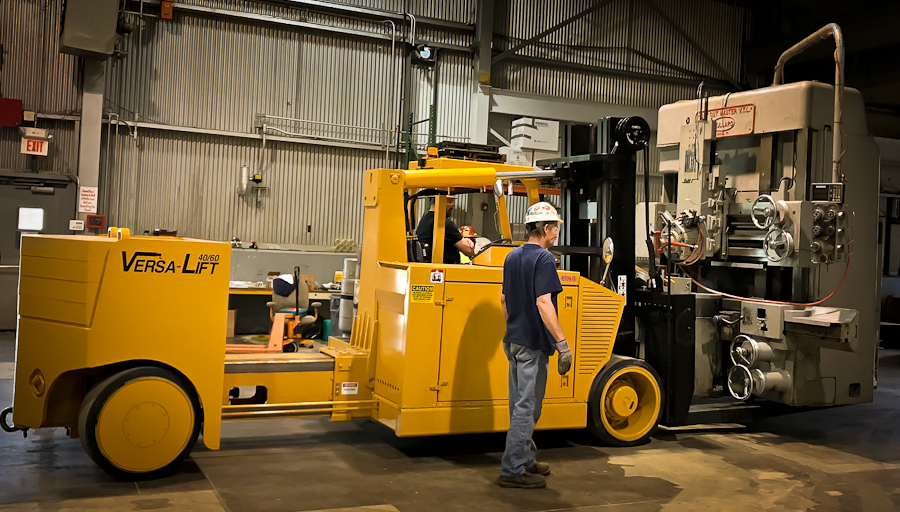

Moving large machinery is a highly specialised task that demands detailed planning, technical expertise, and absolute precision. Whether industrial equipment needs to be relocated for major repairs, site redevelopment, or operational upgrades, lifting and transporting machinery weighing tens or even hundreds of tonnes is never straightforward. The risks involved extend beyond logistics and include safety, compliance, cost control, and asset protection.
Modern industrial environments rely heavily on professional heavy-lift services to ensure machinery is moved safely, efficiently, and without disruption. With advances in lifting technology, stricter safety regulations, and higher expectations around operational continuity, businesses must consider a wide range of factors before attempting any large machinery relocation. Below are the most critical aspects that should be evaluated to ensure a successful outcome.
1. Weight Assessment and Load Capacity
Accurately determining the weight of the machinery is the foundation of any heavy-lift operation. Both the crane and transport vehicle must be rated well above the total load, including attachments, rigging equipment, and any additional components that may be lifted simultaneously.
When looking for cranes in Perth, experienced providers operate fleets with varied lifting capacities, allowing them to match the crane precisely to the load requirements. This ensures stability throughout the lift and reduces stress on both the machinery and lifting equipment.
Professional crane operators carefully calculate load charts, boom extension limits, and lifting radius to ensure the crane remains within safe operating parameters at all times. Even small miscalculations at extreme weights can compromise stability, making expert evaluation essential.
2. Machinery Dimensions and Shape
Large machinery rarely comes in neat, uniform shapes. Oversized boilers, vertical kilns, turbines, presses, and industrial tanks often present irregular dimensions that affect lifting strategy and transport planning.
Operators must account for height, width, length, and centre of gravity, as these factors influence how the load behaves once suspended. Clearance issues, overhead obstructions, and turning radii during transport are all assessed before the lift begins.
In many cases, trial lifts or simulated rigging plans are developed to confirm the machinery can be manoeuvred safely into its final position without interference.
3. Site Conditions and Ground Stability
Ground conditions play a critical role in crane safety and performance. Uneven terrain, soft soil, underground services, or sloping surfaces can significantly affect crane stability if not properly addressed.
Modern cranes are equipped with stabilising outriggers and levelling systems, but these must be deployed on suitable ground capable of supporting the imposed load. Load-bearing assessments, ground compaction checks, and the use of crane mats or steel plates are now standard best practices.
A thorough site inspection ensures the crane platform remains level throughout the lift, which is essential when handling extreme weights.
Backed by over 50 years of expertise, Membrey’s remains the crane hire Melbourne solution businesses rely on for safe, compliant, and efficient lifting operations.
4. Slings, Chains, and Rigging Equipment
Selecting the correct rigging equipment is just as important as choosing the right crane. Slings, chains, shackles, and lifting beams must be rated appropriately and suited to the machinery’s design.
Slings are routinely inspected for wear, fraying, or structural weakness, while chains must be properly lubricated and free from deformation or corrosion. Using unsuitable or compromised rigging components dramatically increases the risk of failure.
Experienced ground crews handle the attachment and removal of rigging equipment, working in close coordination with the crane operator to maintain control and balance throughout the lift.
5. Correct Identification of Lifting Points
Every piece of machinery has designated lifting points designed to bear the load safely. Identifying and using these points correctly is essential to prevent shifting, tilting, or uncontrolled movement.
Incorrect sling placement can introduce dangerous pivot points, causing the load to rotate unexpectedly once lifted. This not only risks damaging the machinery but also endangers personnel working nearby.
Detailed lift plans now routinely include diagrams that specify sling angles, attachment locations, and balance calculations to eliminate guesswork during execution.
6. Controlled Loading and Placement
Once the machinery is airborne, the focus shifts to precise positioning on the transport vehicle or installation site. This stage requires constant communication between the crane operator and the ground team.
Machinery must be placed exactly as planned to ensure load distribution remains within vehicle limits and to prevent movement during transit. Protective supports, timber blocks, or custom cradles may be used to cushion contact points and protect sensitive components.
Careful loading also reduces the risk of damage caused by vibration or uneven weight distribution during transport.
7. Weather and Environmental Conditions
Environmental factors, particularly wind, are a major consideration in heavy lifting operations. Large machinery presents a significant surface area, making it susceptible to wind-induced movement once suspended.
Even moderate wind conditions can cause a load to sway, increasing the difficulty of control and positioning. For this reason, lifts are often postponed or aborted if weather conditions exceed safe operating thresholds.
Best practice now includes continuous monitoring of weather conditions before and during lifting activities to ensure safety is never compromised.
8. Preventing Damage to High-Value Equipment
Industrial machinery represents a substantial investment, and even minor damage can lead to costly downtime or repairs. Crane operators and project planners carefully assess protruding components, vulnerable surfaces, and sensitive control systems before lifting begins.
Protective measures such as padding, temporary bracing, or partial disassembly may be implemented to safeguard delicate areas. The machinery’s interaction with the truck bed or installation surface is also evaluated to prevent stress points or impact damage.
The objective is not just to move the machinery, but to ensure it arrives in the same operational condition as when it was lifted.
9. Compliance, Safety, and Operational Expertise
Heavy machinery relocation is governed by strict safety standards and compliance requirements. Professional crane hire providers follow detailed risk assessments, method statements, and safety protocols to protect workers, assets, and surrounding infrastructure.
Engaging experienced professionals ensures that regulatory requirements are met while maintaining operational efficiency and minimising disruption.
10. Planning, Coordination, and Professional Execution
Successful machinery relocation depends on meticulous planning and coordination. From initial site inspections to final placement, each phase must be executed seamlessly to avoid delays and unexpected costs.
Professional crane hire companies now provide comprehensive project management support, including lift studies, transport coordination, and on-site supervision. This integrated approach improves safety outcomes and ensures machinery is relocated efficiently.
When the stakes are high, partnering with skilled heavy-lift specialists delivers peace of mind and reliable results.
There is much at stake when lifting and transporting large machinery. Engaging experienced professionals, conducting thorough planning, and using the right equipment are essential to achieving a safe and successful relocation. A simple search such as ‘crane hire near me’ can help identify reputable providers in your area, but selecting a company with proven expertise remains the most important decision of all.

Comments are closed.